MỤC LỤC
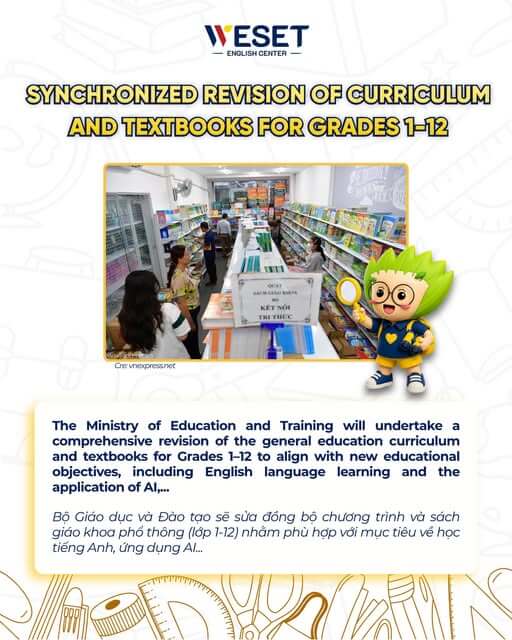 Năm học 2026–2027 đánh dấu nhiều định hướng mới trong giáo dục phổ thông. Bộ Giáo dục và Đào tạo sẽ đồng bộ sửa đổi chương trình và sách giáo khoa từ lớp 1 đến lớp 12, trong đó chú trọng tiếng Anh, năng lực số và trí tuệ nhân tạo (AI).
Theo định hướng nhiệm vụ năm học mới, chương trình sẽ được tinh giản nội dung và tăng cường các hoạt động thực hành, trải nghiệm, STEM, ngoại ngữ, năng lực số, AI, nghệ thuật và giáo dục thể chất.
Đáng chú ý, Bộ cũng đặt mục tiêu từng bước đưa tiếng Anh trở thành ngôn ngữ thứ hai trong trường học.
Bộ đang lấy ý kiến về đề xuất dạy tiếng Anh bắt buộc từ lớp 1, với 70 tiết/năm, dự kiến áp dụng từ năm học 2028–2029.
Định hướng này đồng thời chú trọng phát triển toàn diện 4 kỹ năng nghe, nói, đọc, viết, giúp học sinh xây dựng nền tảng ngoại ngữ vững chắc ngay từ sớm.
Những thay đổi trên được kỳ vọng sẽ giúp học sinh phát triển tốt hơn về ngoại ngữ, công nghệ và khả năng thích ứng, qua đó chuẩn bị hành trang cho học tập, nghề nghiệp và hội nhập quốc tế.
Vietnam’s Ministry of Education and Training will comprehensively revise the general education curriculum and textbooks for Grades 1–12, with a stronger focus on English, digital competencies, and artificial intelligence (AI).
Under the key tasks and solutions for the 2026–2027 academic year, the curriculum will be streamlined while placing greater emphasis on practical learning, experiential activities, STEM, foreign languages, digital competencies, AI, arts, and physical education.
The Ministry also aims to gradually make English a second language in schools.
Notably, the Ministry is seeking feedback on a proposal to make English compulsory from Grade 1, with 70 lessons per year, starting from the 2028–2029 academic year.
The proposal also emphasizes the balanced development of all four language skills: listening, speaking, reading, and writing, helping students build a stronger English foundation from an early age.
These changes are expected to support students in developing foreign language skills, technological competencies, and adaptability, better preparing them for education, future careers, and international integration.